Together, we solve the challenges of tomorrow.
SEE MORE →Seismic engineering in Bognor Regis addresses the critical need to evaluate and mitigate earthquake risks, even in a region not traditionally associated with high seismicity. This category encompasses a suite of specialised analyses and design strategies that protect structures, infrastructure, and lives from ground shaking, soil failure, and secondary hazards. For a coastal town like Bognor Regis, understanding local seismic behaviour is essential to ensure resilience in both new developments and retrofitting projects, particularly given the potential for soft soil amplification and the proximity to the English Channel. Our comprehensive approach integrates advanced techniques such as soil liquefaction analysis, base isolation seismic design, and seismic microzonation to deliver site-specific, code-compliant solutions.
The geological setting of Bognor Regis is dominated by Quaternary superficial deposits overlying a Cretaceous chalk bedrock. These deposits include alluvium, raised beach deposits, and brickearth, which can exhibit complex dynamic behaviour under seismic loading. The presence of loose, saturated sandy layers within the alluvium raises valid concerns about cyclic mobility and liquefaction, while the brickearth—a silty, low-plasticity material—is prone to strength degradation. The relatively shallow water table, influenced by tidal fluctuations, further complicates the seismic response, making rigorous ground investigation and dynamic soil testing a prerequisite for any major project. Understanding this local geology is the first step in applying effective seismic hazard mitigation measures.
In the United Kingdom, seismic design is governed by Eurocode 8 (BS EN 1998), which provides a framework for earthquake-resistant design, complemented by the UK National Annex that defines local seismic hazard parameters. For Bognor Regis, the reference peak ground acceleration is modest but not negligible, typically around 0.02g to 0.04g for a 475-year return period. However, the code mandates specific studies for sites with challenging ground conditions, such as those susceptible to liquefaction or slope instability. Compliance with BS EN 1998-5 on foundations and retaining structures is particularly relevant here, often triggering the need for soil liquefaction analysis to assess the factor of safety against this limit state. Additionally, the Building Regulations 2010 (as amended) require that structures are designed and constructed to withstand foreseeable ground movements, which implicitly includes seismic effects when a risk is identified.
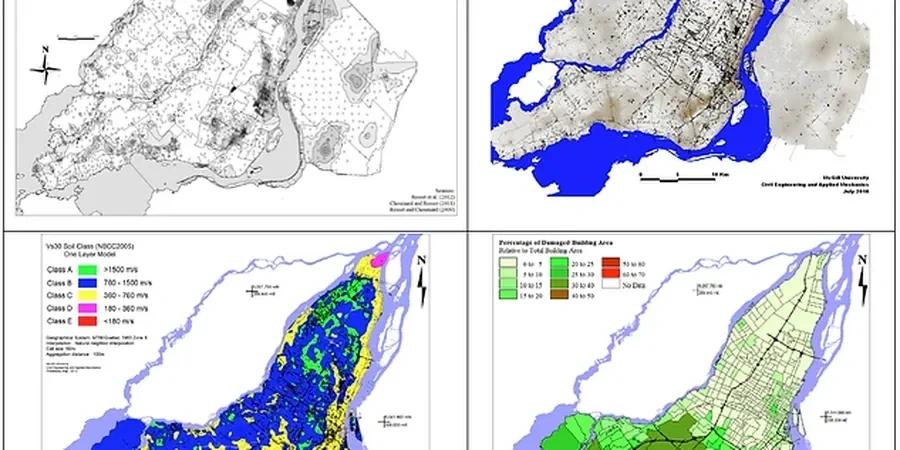
The types of projects that demand seismic expertise in Bognor Regis are diverse. Taller residential or commercial buildings, especially those with irregular configurations or those exceeding four storeys, often require a more detailed seismic assessment. Critical infrastructure such as hospitals, emergency response facilities, and utility networks must remain operational after an event, making base isolation seismic design a vital consideration. Large-scale coastal defence works, bridges, and industrial facilities with sensitive equipment also fall into this category. Furthermore, any development on reclaimed land or within areas identified as having soft clay or loose sand deposits will likely require a seismic microzonation study to map ground motion amplification and permanent deformation hazards across the site, ensuring that structural designs are appropriately calibrated to local subsoil conditions.
Although the UK experiences infrequent and generally low-magnitude earthquakes, the seismic hazard is not zero. Bognor Regis has specific geological conditions, such as soft alluvial soils and a high water table, that can amplify ground motions and trigger ground failures like liquefaction. Eurocode 8 and UK Building Regulations require a seismic assessment for certain structures and ground types to ensure life safety and limit damage, making it a legal and practical necessity for many developments.
A standard site investigation primarily determines soil strength and compressibility for static foundation design. A seismic microzonation study goes further by evaluating how local geology will modify earthquake ground motions. It maps spatial variations in spectral acceleration, identifies areas prone to liquefaction or landsliding, and classifies ground types according to Eurocode 8. This provides a detailed hazard map for a site or region, allowing engineers to tailor structural designs to specific subsoil responses rather than using a single, conservative assumption.
Base isolation is typically recommended for critical or essential facilities that must remain fully operational after an earthquake, such as hospitals or emergency control centres. It is also highly effective for protecting sensitive equipment or heritage structures where conventional strengthening would be too invasive or costly. By decoupling the building from ground motion, base isolation drastically reduces floor accelerations and inter-storey drifts, offering superior performance compared to simply increasing structural strength, especially on softer soil sites common in Bognor Regis.
A soil liquefaction analysis assesses the risk of saturated sandy soils losing strength and behaving like a liquid during shaking. If the analysis indicates a high potential, foundation design must be adapted. This could involve ground improvement techniques like vibro-compaction or stone columns, selecting deep pile foundations that bypass the liquefiable layer, or designing the structure to tolerate limited settlement. In Bognor Regis, where loose alluvial sands are present near the water table, this analysis is often critical for waterfront developments and infrastructure.
We serve projects across Bognor Regis and surrounding areas.