Together, we solve the challenges of tomorrow.
SEE MORE →In the coastal town of Bognor Regis, where the interplay between the built environment and the underlying geology is particularly pronounced, the category of slope stability analysis and retaining structures forms a critical pillar of geotechnical engineering. This discipline encompasses the assessment, design, and remediation of natural and man-made slopes and the walls that support them. The importance here is amplified by the town's position on the West Sussex coastal plain, where even modest changes in topography can influence development, drainage, and long-term asset integrity. From protecting cliff-top properties against the persistent erosion of the English Channel to enabling safe excavations for new residential foundations, these services are fundamental to sustainable construction and public safety.
Bognor Regis is underlain by a sequence of Cretaceous Chalk, often overlain by superficial deposits of Quaternary Brickearth, Head, and raised beach sediments. These local conditions present distinct geotechnical challenges. The Chalk is a soluble, fractured rock that can contain solution features and variable weathering profiles, while the overlying Brickearth is a fine-grained, collapsible silty clay that can lose strength when saturated. This geological setting demands a thorough understanding of soil and rock mechanics to prevent failures. A robust slope stability analysis must account for these materials' specific behaviours, including the risk of rotational slips in the superficial deposits and wedge failures in the underlying fractured chalk, especially after heavy seasonal rainfall.
All work within this category must strictly adhere to the UK's comprehensive regulatory framework, primarily the suite of British Standards and Eurocodes. The design and execution of earthworks and retaining structures are governed by Eurocode 7 (BS EN 1997-1 and -2), which mandates a limit state design philosophy and requires detailed ground investigation to BS EN 1997-2 and BS 5930. For retaining wall design, this involves calculations for bending, shear, and overall stability under Eurocode 2 for concrete or Eurocode 3 for steel elements. The execution of geotechnical works is further controlled by BS EN 1997-1 and the CDM Regulations 2015, ensuring that temporary works, such as those for deep excavations, are designed and managed with the same rigour as permanent structures.
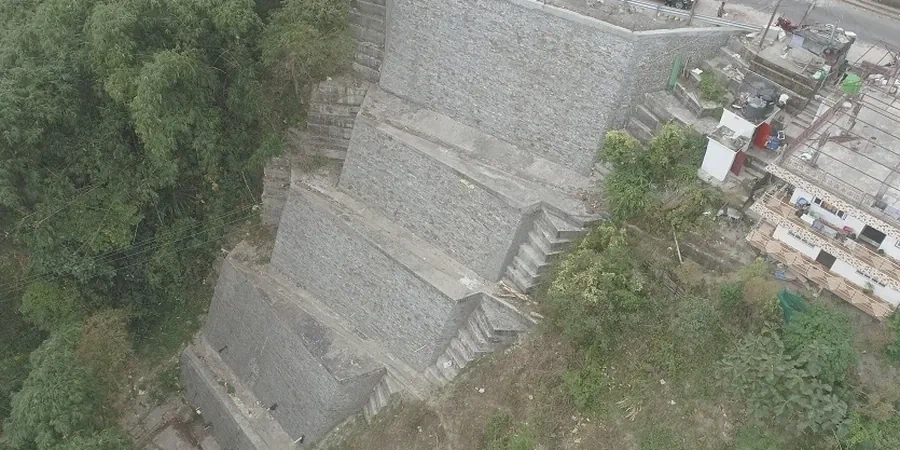
The types of projects requiring these specialist services in Bognor Regis are diverse. Coastal defence schemes frequently need robust retaining solutions to combat erosion and protect infrastructure, while hillside residential developments demand careful slope stabilisation. Commercial builds with deep basements, such as those near the town centre, rely on complex temporary and permanent retaining wall design. Infrastructure improvements, including road widening on sloping ground or the installation of drainage systems, also trigger the need for stability assessments. Furthermore, the use of active/passive anchor design becomes essential for providing additional lateral support to sheet pile walls or for stabilising existing masonry walls showing signs of distress, offering a versatile solution where space is at a premium.
Look for fresh cracks in the ground or paving, leaning or tilting trees and fence posts, sudden changes in drainage patterns, and bulging or cracking in existing retaining walls. Internally, doors and windows that begin to stick can indicate ground movement. Given the local Brickearth deposits, any of these signs after prolonged rain warrant immediate professional assessment.
An active anchor is tensioned against the structure immediately after installation, applying a pre-determined load to prevent any movement, making it ideal for supporting sensitive existing structures. A passive anchor is only tensioned by the ground's subsequent movement, so it allows a small, controlled deformation before providing full restraint, commonly used for temporary works or where slight movement is acceptable.
The design must comply with Eurocode 7 (BS EN 1997) for geotechnical design and Eurocode 2 or 3 for structural design. Crucially, the aggressive coastal environment requires a durability design to BS 8500 for concrete, specifying a higher exposure class (XS) to resist chloride attack. The Planning Authority may also require a Flood Risk Assessment and an Environmental Impact Assessment for significant coastal works.
Brickearth is a collapsible, metastable soil that can lose significant strength and volume rapidly when saturated, often without warning. This behaviour necessitates more extensive ground investigations and often leads to more robust and costly design solutions, such as deeper foundations, soil replacement, or extensive drainage measures, to mitigate the risk of sudden collapse and ensure long-term stability.
We serve projects across Bognor Regis and surrounding areas.