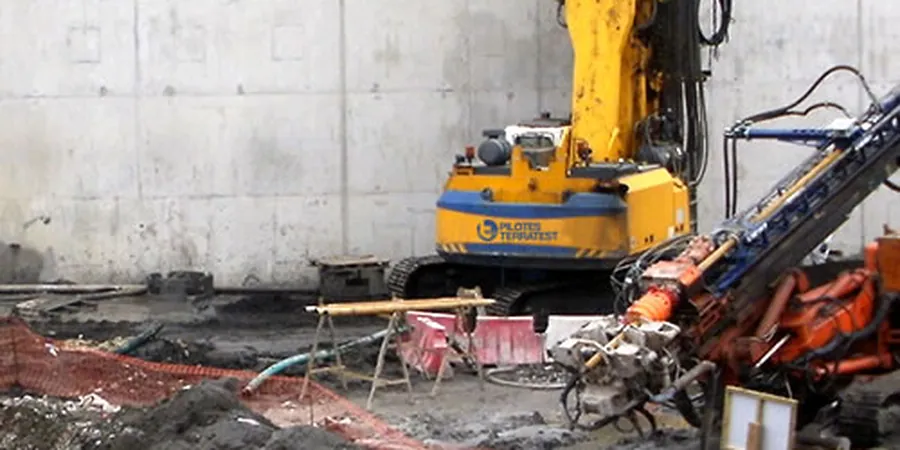
BS EN 1997-1:2004 demands a design approach rooted in site-specific ground investigation, and in Bognor Regis that means grappling with the superficial Brickearth deposits over the London Clay Formation. We see a lot of projects here where differential settlement becomes the critical issue, especially on the low-lying coastal plain near Aldwick or Felpham where the water table sits high. A proper grouting design needs to lock down the injection parameters—grout type, pressure, and pattern—to match the permeability contrast between the silt and the underlying clay. Without that, you risk fracturing the formation. In our experience, combining the grouting scope with targeted test pits helps verify the exact depth of the Brickearth interface before any rig moves onto the site.
In Bognor Regis, grouting success depends on managing the perched water in the Brickearth—miss that layer and settlement problems return within two years.
Common questions
What grout injection method do you generally specify for the Brickearth in Bognor Regis?
For the silt-dominant Brickearth, we typically specify Tube-à-Manchette (TAM) injection with sleeved ports at 0.33 m vertical spacing. This lets us treat discrete horizons precisely and re-inject if necessary. Lance injection is reserved for shallow treatment down to 2.5 metres where access is tight.
How much does a grouting design package cost for a residential project in the Bognor Regis area?
For a typical residential extension or small block of flats in Bognor Regis, the grouting design fee ranges from £1,090 to £2,890, depending on the number of injection points, the level of ground investigation data already available, and the complexity of the monitoring specification required.
How do you verify that the grouting has achieved the design permeability target?
We include a verification stage in the design: a series of post-injection falling-head tests in standpipes or packer tests in boreholes, carried out at least seven days after grouting. The acceptance criterion is a permeability reduction to at least 1×10⁻⁷ m/s across the treated zone, checked against pre-treatment values.