← Home · In-Situ

Field Permeability Testing (Lefranc & Lugeon) in Bognor Regis

Together, we solve the challenges of tomorrow.

SEE MORE →

A steel slotted standpipe, a graduated reservoir, and a controlled head of water—that’s the core setup our engineers deploy across Bognor Regis to quantify how water moves through the ground. Whether we are working near the chalk bedrock that defines the South Downs or within the raised beach deposits along Aldwick, the Lefranc and Lugeon field permeability test gives us direct measurements of hydraulic conductivity that no lab remoulding can replicate. In a town where just 6 metres of elevation separates the seafront from inland residential zones, understanding groundwater flow is not just a box-ticking exercise. Our team runs these tests inside boreholes at target depths, often complementing the data with a test pits investigation when near-surface soils like brickearth require visual classification before deeper permeability profiling begins.

A Lugeon value below 1 Lu in the chalk means you can practically grout with a needle—above 10 Lu and you are looking at curtain injection across the entire excavation perimeter.

Approach and scope

BS 5930:2015 and Eurocode 7 (BS EN 1997-2:2007) frame every in-situ permeability test we perform in Bognor Regis, and for good reason. The local geology transitions sharply from the chalk of the Southern England Chalk Formation to superficial drift deposits, and the water table across the coastal plain sits high enough to influence basement excavations within 2–3 metres of ground level. A falling-head Lefranc test in a cased borehole gives us reliable K-values in granular soils, while a Lugeon test with a pneumatic packer isolates fractured chalk zones to measure transmissivity under pressure stages of up to 1 MPa. In our experience, designs that skip this step on the Bognor seafront end up with dewatering systems that are either oversized or, worse, incapable of handling the tidal influence on the local groundwater regime. For foundation designs where saturation affects bearing capacity, we often pair this with an SPT drilling campaign to correlate permeability with standard penetration resistance.
Field Permeability Testing (Lefranc & Lugeon) in Bognor Regis
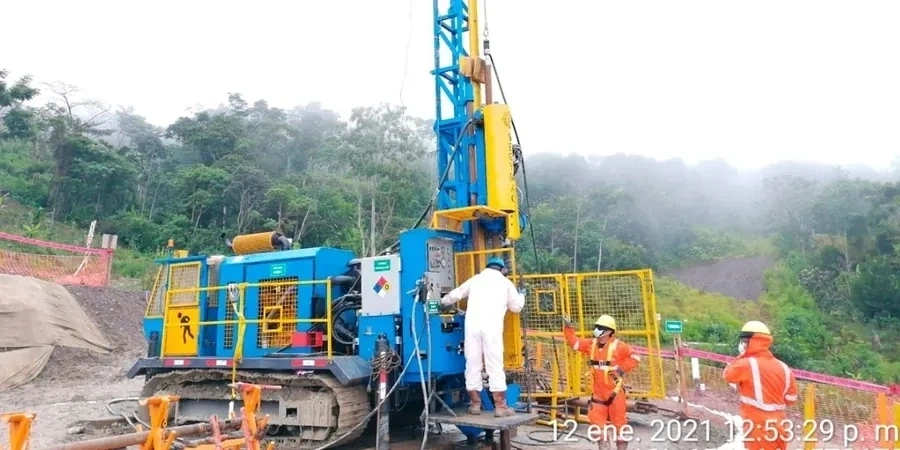
Technical reference image — Bognor Regis

Site-specific factors

The 2008 groundwater flooding event in West Sussex put over 150 properties under water in the Chichester district alone, and Bognor Regis sits on the same permeable chalk aquifer that can rise rapidly after sustained rainfall. What we frequently see in the Pagham and Rose Green areas is a thin cover of sandy clay over fissured chalk—a profile that gives a false sense of impermeability during a dry summer but turns into a drainage nightmare in winter. A proper field permeability test identifies these vertical shortcuts for water before they surprise you mid-construction. The tidal lag effect measured in Bognor’s coastal boreholes means groundwater levels can remain elevated for hours after high tide, and our Lefranc testing directly quantifies how quickly that pressure dissipates through the strata under your proposed foundation level.

Need a geotechnical assessment?

Reply within 24h.

Email: contact@geotechnical-engineering1.com

Service video


Technical parameters

ParameterTypical value
Test standardBS 5930:2015 — Lefranc & Lugeon procedures
Borehole diameter76–150 mm depending on packer configuration
Packer typeSingle or double pneumatic, rated to 1–2 MPa
Head measurementElectronic transducer with 0.1 mm resolution
Lugeon pressure stages5 steps at Pmax, descending to Pmin (Houlsby method)
Typical test depth3–30 m below ground level in Bognor Regis
Reported K range10⁻⁸ to 10⁻³ m/s depending on stratum

Related technical services


01

Lefranc falling/constant head tests

Performed in soils where the test section remains stable without packer support. We measure flow rate under a known head difference and compute hydraulic conductivity for dewatering system sizing.

02

Lugeon packer testing in rock

Targeted at fractured chalk and the Upper Greensand where discrete zones must be isolated. Five-stage pressure cycles reveal hydraulic aperture, fracture connectivity, and groutability.

03

Permeability profiling for SUDS and soakaways

BS 6297 and BRE Digest 365 compliant testing to support sustainable drainage design in Bognor Regis residential and commercial developments, including falling-head tests in trial pits.

Relevant standards

BS 5930:2015 — Code of practice for ground investigations, BS EN 1997-2:2007 Eurocode 7 — Ground investigation and testing, ISO 22282-2:2012 — Geotechnical investigation and testing — Geohydraulic testing — Part 2: Water permeability tests in a borehole using open systems, Houlsby (1976) — Routine interpretation of the Lugeon water-test

Common questions


How much does a field permeability test cost in Bognor Regis?

A single Lefranc test in a prepared borehole typically falls between £560 and £820. The exact figure depends on borehole depth, number of test intervals, and whether we need a pneumatic packer for Lugeon testing. Mobilisation to Bognor Regis is included within the local area.

Which permeability test method suits the chalk in Bognor Regis?

For the chalk we almost always recommend the Lugeon packer test. The chalk here is fissured, and a Lefranc test without packer isolation would smear the measurement across the entire open hole. Isolating a 1–3 metre section with a double packer gives us a true hydraulic conductivity per fracture set.

How long does the testing take on site?

Plan on half a day per test interval. That includes packer inflation, saturation time, and the full five-stage pressure cycle if we follow the Houlsby method. For a 15-metre deep borehole with three test zones, the rig and permeability crew are usually on site in Bognor Regis for a full working day.

Do I need a field permeability test for a simple house extension?

If your extension in Bognor Regis includes a basement deeper than 2 metres, or if building control requires a soakaway design per BRE Digest 365, then yes. We can run a falling-head test in a hand-excavated trial pit at the proposed soakaway depth, which keeps things quick and avoids the cost of a full drilling rig.
Location and service area

We serve projects across Bognor Regis and its metropolitan area.

View larger map